






The second season of Netflix’s Avatar: The Last Airbender, a live-action remake of the seminal animated series has dropped, and brought with it a slew of… well, mostly discussions about what was changed in service of the show’s seven-episode runtime. My initial inclination was to write a simple review, but as I continued watching, it seemed less and less pressing to offer up any thoughts about how well this season of television worked or didn’t. Instead, I was left with an overwhelming sense of bother over the state of television as a whole.
I’ve talked about this problem before in reference to Star Trek, and I’m sure there are plenty of folks who are tired of the argument. Art forms change, of course, and trying to stem that tide toward a different result is rarely as successful as we might like. But there’s a strangeness to the counter-arguments that always seem to run the same way: Not only is change unstoppable—it is good because that’s what change is. It’s oddly binary thinking applied to a specific aspect of artistic process and evolution, and the defense of it has frankly never made sense to me, particularly when so much of the art we enjoy is corporately owned. (And hoo boy, is that ever an aside for another time…)
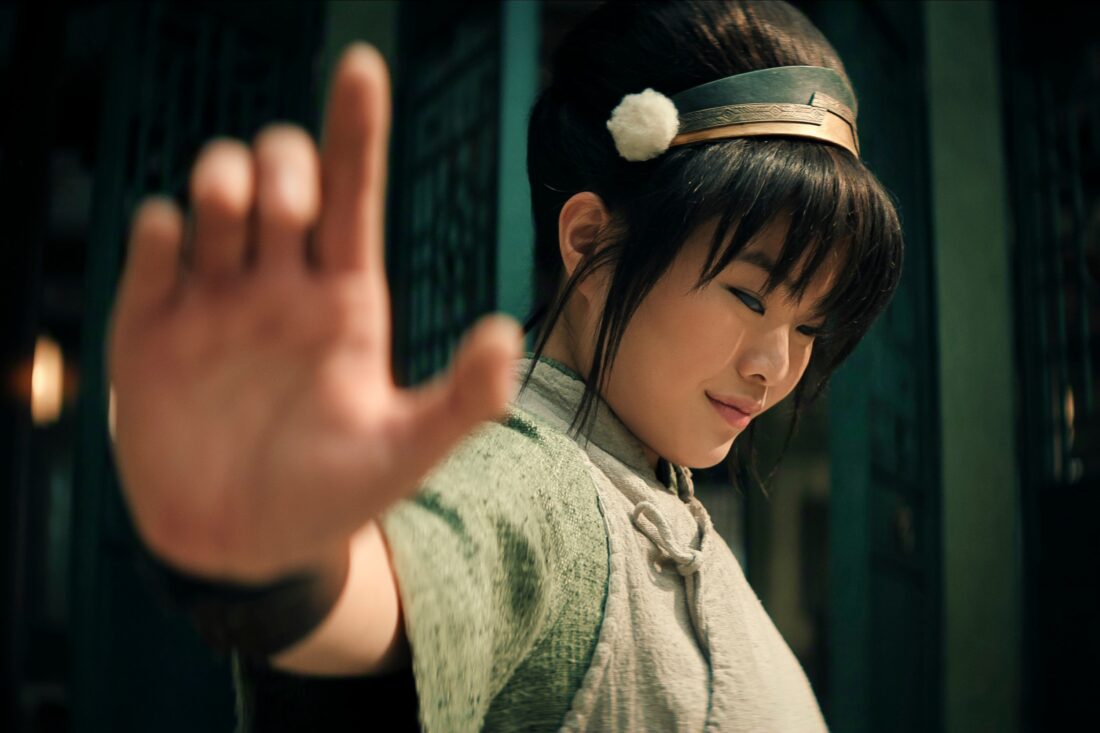
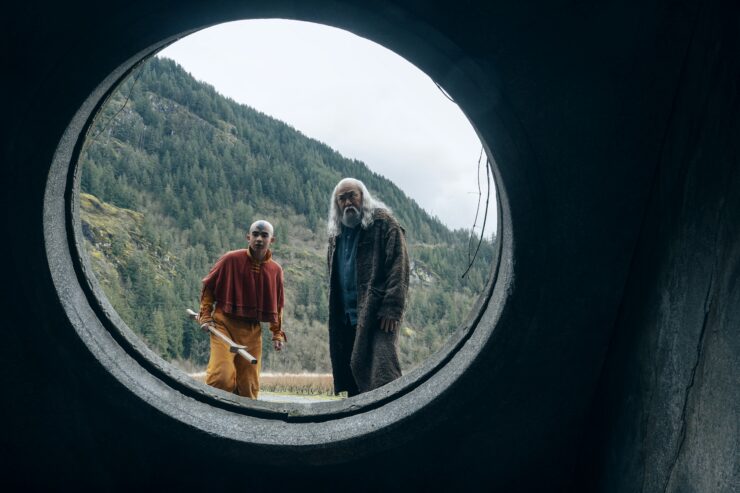
In many ways, the second live-action season of The Last Airbender fares better than the first. The alterations made are more creative this time around, and many of them seem designed to examine different aspects of character and story that went unexplored in the first telling. The episodes are a full hour, so one could even argue that we’re getting close to the original’s season runtime in terms of overall runtime—animated ATLA episodes were roughly 23 minutes in length. But an episode is still a discrete measure in storytelling, and a season told in seven parts rather than 20 changes the parameters; it demands that you press pieces of a narrative together that were conceived apart from one another.
The result gives us episodes that are constantly overworking, especially if they are created from longer, more involved original sources. A way to avoid this pitfall is to work from shorter narratives—one of the reasons the Murderbot series started so strong was the fact that it was pulling from a novella rather than a novel. Less to adapt makes a shorter season run viable and cleaner to pull off. But even that cannot solve the problem of diverted attention, and the assumption that audiences comprehend less than they did a couple decades ago.
Not every project is guilty of this, of course: shows like Interview With the Vampire, The Bear, and Widow’s Bay deliberately create environments where characters speak quickly, often over each other, where emotions are left up to viewer interpretation, and the stories move without obvious cues as to the Week’s Lesson, or reminders about What You Missed while checking your phone notifications. Yet for every show feverishly trying to engulf its viewers, there are seemingly a dozen more that stomp about screeching the point at every available opportunity—a trend the live-action Last Airbender is definitely guilty of, even in scenes that hint at a better show.
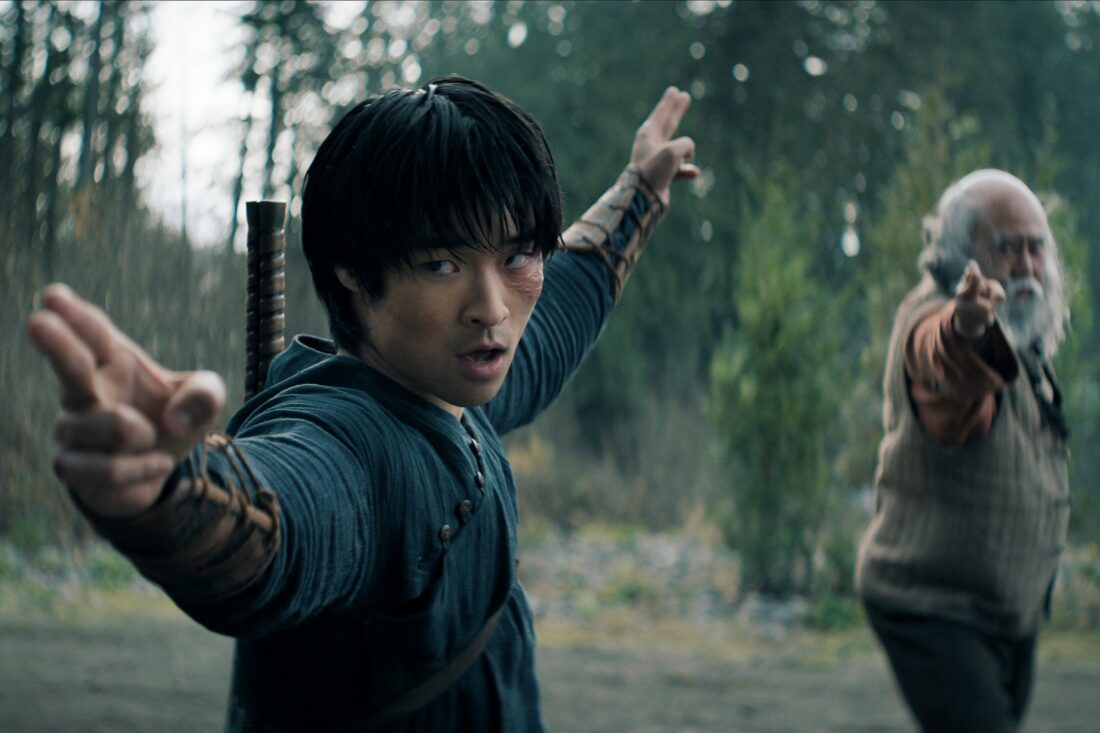
A perfect example of this comes before the “Zuko Alone” plotline, where the banished prince tells his Uncle Iroh something that he never actually says in the animated series—that he believes Iroh is to blame for everything that went wrong within their family because he could not keep his position as the heir apparent. It’s a shocking (but entirely reasonable) read of the family drama, and frankly crueler than anything Zuko says to Iroh in the original story. It could have been a moment that stood out in the live-action iteration, a more adult conversation from a teenager who is struggling to figure out what sort of man he should become. But Iroh’s response to this accusation is simplistic and oddly blunted—he gapes at Zuko with teary eyes and exclaims: “Lu Ten died.”
The live-action series keeps giving up its greatest narrative revelations in moments like these, ones where something subtly given to the audience over time is instead blurted out and robbed of its impact. And that isn’t to say that Iroh’s famous tear-inducing vignette in the “Tales of Ba Sing Se” episode should have been replicated exactingly, but to point out that the goal should be recreating impact in another way while also giving Zuko’s character something deeper to work with.
Different relationship dynamics are getting attention in the live-action version as well (there are more glimmerings of Katara/Zuko for sure, which has been a favored pairing from the show’s inception), which is bound to make some fans delighted, all while simultaneously pointing out another weakness in the IP adaptation rotor that is modern TV—is it really worth rehashing an entire story in a slightly different medium with an eye toward resurrecting ship wars? If those are your primary departure points from the original story aside from crunching the narrative into a smaller box… then you’re basically funding fanfiction at the corporate level. (Important to note, I am not knocking fanfiction or fan works in any way, but rather the corporatization of that mentality and creativity.)
The only place where these changes truly work show up in Sokka’s difficulty with Yueh’s death from the end of season one, and seeing how it impacts his desire to form a closer connection to Suki. While the animated show breezes through these issues in a manner that is pointedly unrealistic—even by its zanier standards—the chance to linger on Sokka’s grief and confusion is one bright point in the live-action’s favor that isn’t truly replicated elsewhere. There is an attempt to seed Aang’s affection for Katara, and how awkwardly that’s proceeding, but it’s plagued with the modern-day need to over-burden the audience with extended pauses and “signs,” rather than letting Aang simply show this affection through the character’s natural personality.
Unfortunately, Aang’s personality is getting bogged down by paranoia over who he can trust this season. It’s a strange veer that doesn’t play with the show’s original plot because there’s no time to build up that tension, but even if there were, it can’t help but read like an attempt to inject contemporary concerns into a narrative that has no need for them. (I get that Ba Sing Se has secret police who are great at brainwashing, but why is Aang, specifically, falling prey to fear about who he can trust when he’s not spending time on the internet, constantly wondering if pictures of cute animals are real or AI generated?)
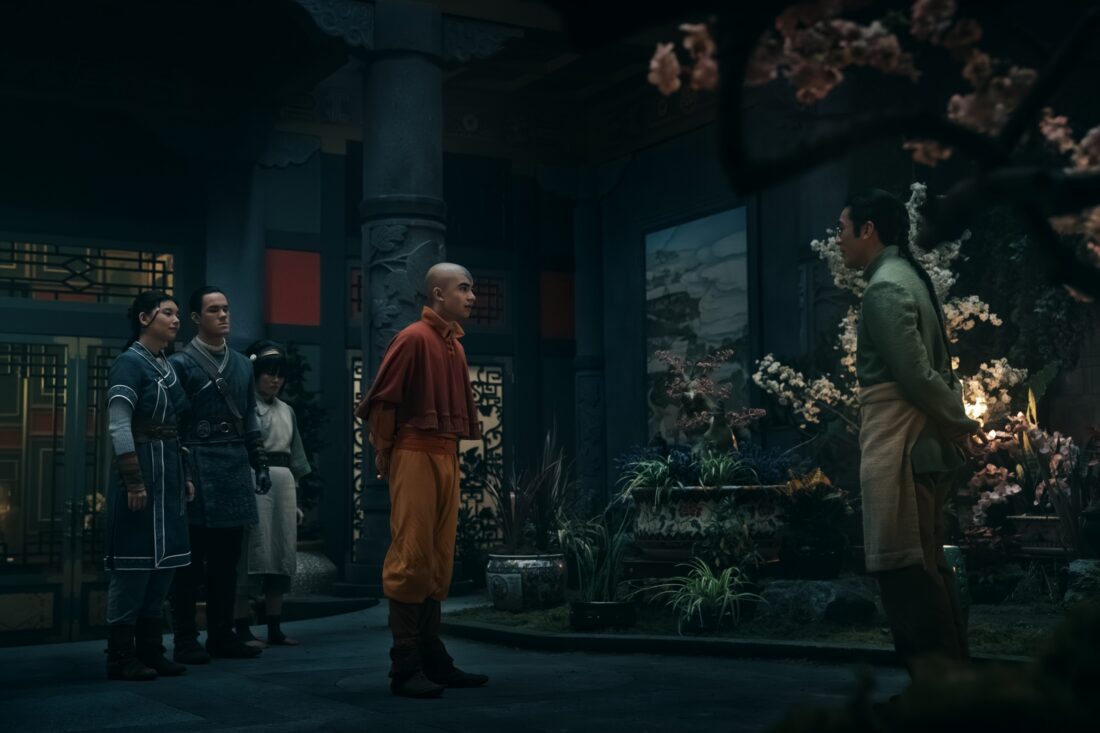
Other themes of the story are being altered to more directly reflect the current zeitgeist and the problems we’re experiencing within it—rather than being distractible and kind of dim, the Earth King is simply leaving the job of ruling to Long Feng because politics make him queasy, for example. There’s an eye toward the military industrial complex, too, with new indication that Toph’s parents might be helping the Fire Nation manufacture weapons in the name of good business. But compressing the storyline also eliminates some of the most important themes of the series; with nearly the entire season occurring inside the walls of Ba Sing Se, all of the environmental messaging is cut to shreds. Katara assumes the mantle of the Painted Lady for the sake of protecting people within the city walls rather than handling a fishing village’s poisoned water (which would be equally topical given the data center construction fights happening across the Unites States), and we never meet the swampbenders, or have to contend with the toll of the Fire Nation’s mechanized might on the natural world beyond the first season’s briefest interludes.
That last issue also illuminates a common difficulty for television these days: Wildly varying budgets from project to project, and what that money gets spent on. The Mandalorian reportedly cost Disney roughly 15 million dollars an episode. House of the Dragon started out with 30 million dollars per episode in its first season, and petered to under 20 million per episode as time wore on. 3 Body Problem counts on 20 million per episode, the live-action One Piece gets 18 million, The Witcher’s last season got 27 million an episode, and Wednesday reportedly got a hike to 20 million per episode in its second season. Netflix darling Stranger Things counted on an exasperating 50-60 million dollars an episode for its final run. The first season of the live action Last Airbender reportedly clocked in at 120 million for eight episodes, which makes for 15 million dollars per episode, putting it on the lower end of these (frankly absurd) numbers.
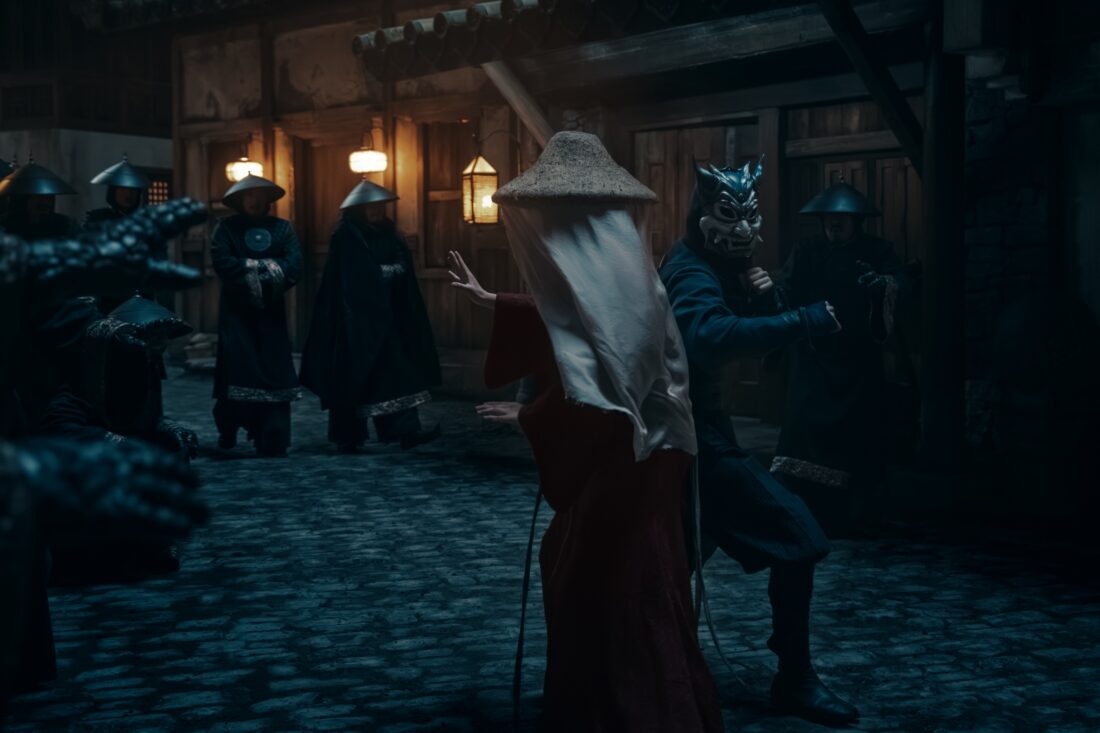
But while the close-up environment maintains a charming bridge-like quality, sitting aesthetically between real locations/items/clothing and their animated counterparts, it’s the set pieces and scope that miss out every time. The Mandalorian worked within its parameters by building certain complex components and puppetry to help ameliorate these issues. (And it didn’t always work, but it was thrilling when and where it did.) But The Last Airbender looks hokey at a distance, particularly in every place where CGI has to win out over building something physical—which often leads to omitting these segments entirely. The drill made to breach the wall of Ba Sing Se and the tank machine used to relentlessly pursue Team Avatar across the Earth Kingdom while it carves an unending scar across the land, neither of them makes an appearance in this season. Appa gets kidnapped, but it’s hard to care overmuch when we barely see the sky bison—because animating him via CGI is costly and, perhaps more importantly, he looks awful.
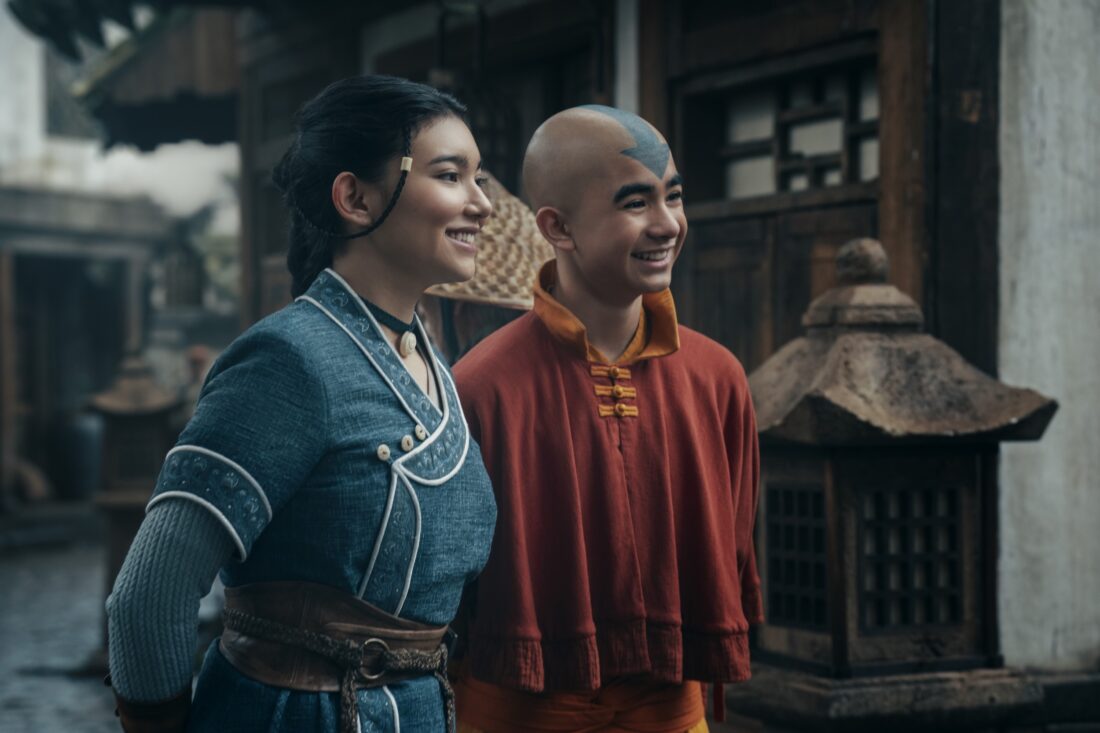
The result of all these choices leaves what should be an epic journey across the world feeling… small. Claustrophobic, even. And it’s a shame because one of the greatest strengths of the original was allowing viewers to experience the whole wide world these kids were trying to save so that we could properly understand what was at stake. The Last Airbender is a story created from a balance of themes and thoughts rather than a singular, narrowed arc of heroism. Its eponymous central character is a testament to this desire, a balancing point between the elements of the world who must still make individual choices, but learns and accomplishes nothing alone.
A seven-episode season, bad CGI, truncated arcs, and the re-rendering of “known IP” is far less than it deserves. But this is what a lot of television is like now, whether we enjoy it or not.
